

23 August 2001. Hisar, Haryana.
It was Sonia Punia’s 19th birthday.
What should have been a family occasion at the Punia farmhouse near Litani village would instead become the beginning of one of Haryana’s most shocking murder cases.
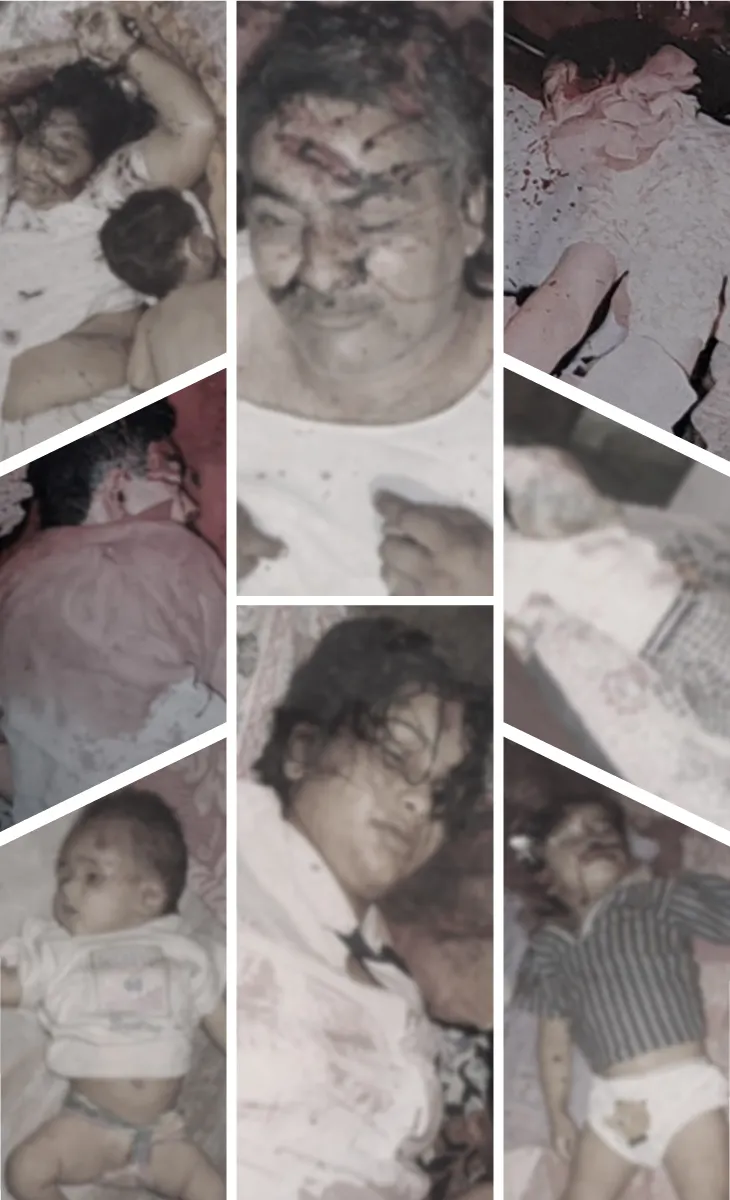
Before the night was over, eight members of the same family would be dead.
The victims included a former MLA, his wife, his son, daughter-in-law, daughter and three small children. The youngest victim was only 45 days old.
At the centre of the case was Sonia — the daughter of former Haryana legislator Relu Ram Punia — and her husband Sanjeev Kumar.
The prosecution alleged, and the courts ultimately found, that the murders were planned and connected to a dispute over the family's property.
More than two decades later, the case continues to generate legal controversy, with the couple's convictions intact, their death sentences converted to life imprisonment in 2014, and their subsequent interim release becoming the subject of another battle before the Supreme Court.
The Family That Would Become the Target
Relu Ram Punia was a prominent political figure in Haryana. He had won the 1996 Haryana Assembly election from the Barwala constituency.
His family possessed considerable property, including agricultural land and other assets.
The family structure was also complicated.
Sonia was Relu Ram's daughter, while Sunil Kumar was her stepbrother, being the son of Relu Ram's first wife.
According to the prosecution case accepted by the courts, Sonia believed that her father intended to favour Sunil and his family in matters relating to property.
That alleged dispute eventually became the central motive in the murder case.
The Supreme Court's 2007 judgment specifically concluded that the killings were connected with Sonia and Sanjeev's desire to prevent Relu Ram from giving property to Sonia's stepbrother and his family.
The Night of 23 August 2001
The events began on Sonia's birthday.
According to the Supreme Court record, Sonia went to bring her younger sister Priyanka alias Pamma from Jindal School in Hisar.
Sonia and Priyanka eventually reached the family farmhouse at Litani at around 9:30 p.m.
A family employee, Jeet Singh, was nearby.
Later that night, between approximately 11 p.m. and midnight, he heard footsteps.
He noticed that a room where tractor spare parts were stored was illuminated.
When he looked inside, he saw Sonia.
According to his testimony, she took an iron rod used for raising or tilting a tractor and carried it toward the house.
At that moment, there was no obvious reason for him to believe that the rod would become the weapon in a massacre.
But it would.
The Birthday Celebration
Later accounts of the case have described the birthday celebration as an important part of the alleged plan.
Recent reporting has stated that Sonia and Sanjeev bought a cake and pastries and that the food was allegedly drugged before being served to members of the family.
According to these reports, several family members became unconscious after consuming it, while Shakuntala Devi, Sunil's wife, reportedly did not eat the cake because she suspected something was wrong.
The subsequent killings were then carried out with an iron rod.
Some reports have further described the killings as lasting approximately four hours, with breaks between attacks.
However, these details should be distinguished from the core Supreme Court findings. The 2007 Supreme Court judgment primarily relied on witness testimony, medical evidence, the confession, forensic evidence, recoveries and the surrounding circumstances rather than every later retelling of the night's events.
The First Victim: Relu Ram Punia
Inside the farmhouse, Relu Ram Punia was asleep.
The prosecution's case was that Sonia and Sanjeev began attacking the family members while they were sleeping.
The weapon was an iron rod.
The attack was not treated by the courts as an act of sudden anger.
The Supreme Court concluded that the murders were premeditated and cold-blooded, and that the victims had offered no provocation.
That finding later became crucial when the Court decided whether the case qualified for the death penalty.
Eight People. Three Generations.
The massacre wiped out members of three generations of the family.
The victims were:
1. Relu Ram Punia — 50
Former Haryana MLA and Sonia's father.
2. Krishna Devi — 41
Relu Ram's wife and Sonia's stepmother.
3. Sunil Kumar — 23
Sonia's stepbrother.
4. Shakuntala Devi — 20
Sunil's wife.
5. Priyanka alias Pamma — 14
Sonia's younger sister.
6. Lokesh — 4
Sunil and Shakuntala's son.
7. Shivani — 2½ years
Sunil and Shakuntala's daughter.
8. Preeti — 45 days
The youngest member of the family.
The Supreme Court specifically highlighted the ages of the three youngest victims — approximately 45 days, 2½ years and four years — when describing the brutality of the crime.
The Most Chilling Part: The Children
The youngest victim was not even two months old.
The Supreme Court treated the fact that the victims included three tiny children as one of the most serious aggravating circumstances in deciding the sentence.
The Court concluded that the killings had been carried out against sleeping and helpless victims and that the nature of the crime was exceptionally brutal.
This was one of the reasons the Supreme Court later described the case as falling within the “rarest of rare” category.
The Four-Hour Horror
According to later media accounts of the case, the killings were not completed in a matter of minutes.
The couple allegedly moved through different parts of the farmhouse, attacking family members one after another.
Reports have described the murders as taking around four hours, with the accused allegedly taking breaks during the process.
One later account also claimed that firecrackers were used to drown out sounds coming from inside the house.
These details add to the chilling narrative surrounding the case, although they should be understood as later reported accounts rather than every detail being expressly recorded as a finding in the Supreme Court's 2007 judgment.
The Morning After
By morning, the farmhouse was silent.
The normal routine eventually began.
A milkman arrived.
Later, a school vehicle came to collect the children.
But nobody opened the door.
The situation became suspicious.
People eventually entered the house.
What they discovered was horrifying.
Eight members of the Punia family were dead.
The victims had been attacked with blunt weapons, and the medical evidence supported the prosecution's case that the injuries were sufficient to cause death.
The farmhouse had become the scene of a mass murder.
Sonia Was Found Alive
There was one person who was still alive.
Sonia.
She was found unconscious and was taken for medical treatment.
The prosecution alleged that she had consumed poison in an attempt to make the incident appear to be a murder-suicide.
This became another important part of the investigation.
Instead of simply treating Sonia as another victim, investigators began examining whether she had been involved in the killings.
Within days, the investigation began turning toward her.
The Suicide Note
Investigators recovered a handwritten note.
The note was presented as a message from Sonia to her husband, Sanjeev.
It contained an apparent admission of responsibility and expressed the intention to end her own life.
Sonia later disputed the prosecution's interpretation and alleged that police had pressured her.
But investigators obtained handwriting samples.
The forensic examination found similarities between Sonia's specimen handwriting and the handwriting on the note.
The suicide note therefore became an important part of the prosecution's case.
Sonia's Judicial Confession
The investigation did not stop with the note.
Sonia's statement was recorded before a Judicial Magistrate.
This was important because a confession recorded before a magistrate is subject to specific safeguards.
The magistrate had to ensure that Sonia understood that she was not bound to confess and that the statement could be used against her.
The Supreme Court examined the circumstances in which the confession had been recorded and ultimately accepted it as voluntary and admissible.
This became one of the strongest pieces of evidence against Sonia.
But What About Sanjeev?
The case against Sanjeev was more complicated.
There was no identical confession from him before a magistrate.
Instead, prosecutors relied on a chain of circumstantial evidence.
Witnesses placed him with Sonia around the relevant period.
Other evidence concerned his movements after the murders.
The prosecution also presented evidence relating to the disposal of clothing and other material connected with the crime.
The Supreme Court carefully examined these circumstances and concluded that the chain of evidence was sufficiently complete to establish his guilt.
The Burned Clothes
One of the prosecution's allegations was that clothes connected with the murders were taken away and burned.
Investigators subsequently recovered material from the area where the burning allegedly took place.
This was presented as evidence of an attempt to destroy evidence.
The Supreme Court considered these circumstances along with the other evidence against Sanjeev.
The Property Dispute
At the heart of the prosecution's theory was a simple but devastating question:
Who would receive Relu Ram Punia's property?
The prosecution alleged that Sonia feared that her father would give property to her stepbrother Sunil and his family.
The Supreme Court accepted this as the motive behind the murders.
In its 2007 judgment, the Court concluded that Sonia and Sanjeev had killed Relu Ram and his family in order to prevent him from giving property to his stepbrother's family.
This made the case even more disturbing.
The victims were not strangers.
They were Sonia's own father, mother, sister, stepbrother, sister-in-law and three children.
The Trial Court
The investigation eventually resulted in Sonia and Sanjeev being put on trial.
The Hisar Sessions Court convicted both.
In 2004, the trial court sentenced them to death.
They were convicted under provisions including Section 302 read with Sections 34 and 120-B of the Indian Penal Code.
Other people were also tried in connection with the case, but the trial court acquitted eight other accused persons for lack of sufficient evidence.
The High Court Gives Them Life Imprisonment
The case then reached the Punjab and Haryana High Court.
The High Court upheld the convictions.
But it disagreed with the death sentence.
It converted the punishment from death to life imprisonment.
The prosecution and other parties challenged that decision before the Supreme Court.
That brought the case to India's highest court.
Supreme Court: Death Penalty Restored
On 15 February 2007, the Supreme Court delivered its judgment in Ram Singh v. Sonia & Ors.
The Court upheld the convictions.
But it went further.
It restored the death penalty.
The Supreme Court held that the murders were not simply multiple killings.
They were, in the Court's assessment, planned, premeditated and exceptionally brutal.
The victims were sleeping.
There was no provocation.
Three of the victims were tiny children.
And the victims included Sonia's own parents and sister as well as her stepbrother's family.
The Court concluded that the crime qualified as one of the “rarest of rare” cases in which capital punishment was justified.
The Court's Extraordinary Observation
The Supreme Court's judgment used exceptionally strong language while describing the crime.
It said that the killings demonstrated an extremely brutal and calculated approach and concluded that the case would be a failure of justice if the death sentence were not imposed.
The Court therefore set aside the High Court's commutation and restored the death sentence.
For Sonia and Sanjeev, the legal battle appeared to be approaching its end.
But it wasn't.
The Mercy Petitions
After the Supreme Court confirmed the death sentence, Sonia and Sanjeev pursued the available legal remedies.
Their review petition was rejected.
Mercy petitions were subsequently made before the constitutional authorities.
The President rejected the mercy petitions in 2013.
At this point, the couple had already spent many years in prison.
Their execution was approaching.
But another legal question emerged:
How long can a person remain under a sentence of death while waiting for the government to decide a mercy petition?
The Death Sentence Becomes Life Imprisonment
In 2014, the Supreme Court considered the issue of delay in deciding mercy petitions.
The Court ultimately commuted Sonia and Sanjeev's death sentences to life imprisonment.
This point is often misunderstood.
The Supreme Court did not overturn their convictions.
It did not declare them innocent.
It changed the punishment.
Their conviction for the murders remained intact.
The death penalty was replaced with life imprisonment, largely because of the extraordinary delay surrounding the mercy process.
Years Behind Bars
Sonia and Sanjeev then spent years in prison.
Their case became an example of the complicated relationship between:
death penalty,
mercy petitions,
delay,
life imprisonment,
remission,
rehabilitation, and
premature release.
Over time, the question changed.
It was no longer:
“Did they commit the murders?”
The courts had already answered that.
The new question was:
“After decades in prison, should they be considered for release?”
2024: Haryana Rejects Premature Release
The couple eventually sought premature release under Haryana's applicable policy.
The Haryana authorities rejected the request.
The authorities' position was challenged in the Punjab and Haryana High Court.
The state argued that the crime was exceptionally heinous and raised questions concerning their conduct and reformation while in prison.
The couple, on the other hand, argued that they had spent decades in custody and were entitled to consideration under the Haryana Premature Release Policy of 2002.
December 2025: A New Twist
After more than two decades, the case suddenly returned to the headlines.
On 9 December 2025, the Punjab and Haryana High Court set aside the rejection of their premature-release claims.
The Court directed the competent authority to reconsider their cases under the 2002 policy.
Importantly, the Court also granted them interim bail until the authority made its decision.
This did not mean their convictions had disappeared.
It did not mean they had been acquitted.
It meant they had been granted temporary liberty while the premature-release question was reconsidered.
Sanjeev Walks Out
Sanjeev's release followed after bail bonds were furnished.
His mother and uncle submitted the required bonds, and the release order was issued.
There were initially additional procedural complications involving other matters, but he was subsequently released from custody.
Sonia's release followed after the necessary formalities were completed.
The development shocked many people who had followed the case for years.
A crime that had once resulted in a death sentence was now entering another legal chapter.
The Victims' Family Challenges the Release
The story did not end with their release.
Relatives of the victims challenged the High Court's decision before the Supreme Court of India.
The Supreme Court issued notice in the matter and continued to examine the dispute surrounding the premature-release process.
By April 2026, the Supreme Court had given Sonia and Sanjeev additional time to respond to the challenge.
The matter remained pending.
A New Rift Between Sonia and Sanjeev
The latest proceedings have also brought another surprising development.
In 2026, reports emerged of an apparent rift between Sonia and Sanjeev.
The two were reportedly living separately after their release, and during subsequent proceedings Sonia was represented by counsel while Sanjeev was initially unrepresented, prompting the Supreme Court to direct fresh notice to him.
Reports have also carried allegations attributed to Sonia in which she blamed Sanjeev for planning and executing the murders.
These allegations are not a reversal of the existing convictions.
Both Sonia and Sanjeev were convicted by the courts, and their convictions remain the established legal position unless changed by a competent court.
What Happened to Their Child?
One of the most tragic side stories of the case concerns Sonia and Sanjeev's own child.
At the time of the massacre, their son was still very young.
After his parents were imprisoned, he was raised by members of Sanjeev's family in Uttar Pradesh.
Later reporting said that he continued to visit his parents in prison.
The child therefore grew up with the consequences of a crime that happened before he was old enough to understand it.
Why Did the Case Become So Important?
The Punia case is important not only because of the number of victims.
It became a major legal case because it touched several difficult questions in Indian criminal law.
1. Circumstantial Evidence
The Supreme Court explained that suspicion cannot replace proof.
Where a case depends on circumstantial evidence, each circumstance must be established and the circumstances must form a complete chain leading to guilt.
2. Confessions
The Court examined the circumstances surrounding Sonia's judicial confession and the alleged extra-judicial confession attributed to Sanjeev.
3. Rarest of Rare Doctrine
The case became an example of the Supreme Court applying the death penalty to what it considered an exceptionally brutal and premeditated crime.
4. Delay in Mercy Petitions
Years later, the same case became part of the broader jurisprudence concerning whether extraordinary delay in deciding mercy petitions can justify commutation of a death sentence.
5. Premature Release
Decades after the crime, the case again entered the courts over remission and premature release.
That is why the Punia case has continued to remain legally significant long after the murders themselves.
Complete Timeline
Year / DateDevelopment23 August 2001Sonia's 19th birthday; the family gathers at the farmhouseNight of 23–24 August 2001Eight members of the Punia family are murdered24 August 2001Bodies are discovered; Sonia is found alive28 August 2001Sonia is arrested, according to later court reporting19 September 2001Sanjeev is arrested2004Hisar Sessions Court sentences Sonia and Sanjeev to death2005Punjab & Haryana High Court commutes death sentence to life imprisonment15 February 2007Supreme Court restores death penalty2007Review petition rejected2013Mercy petitions rejected2014Supreme Court commutes death sentences to life imprisonment because of delay2024Premature-release request rejected by Haryana authorities9 December 2025Punjab & Haryana High Court orders reconsideration and grants interim bailDecember 2025Sanjeev and Sonia are released after bail formalities2026Victims' relatives challenge the release before the Supreme CourtApril 2026Supreme Court gives the couple additional time to respond; litigation continues
The core judicial history is documented in the Supreme Court's 2007 judgment and subsequent reporting on the 2014 commutation and 2025–26 release litigation.
The Question That Still Remains
More than 25 years after the night of 23 August 2001, the Punia case has entered a strange new chapter.
Eight people lost their lives.
A former legislator was killed inside his own home.
Three children were among the victims.
The accused were members of the same family.
A property dispute became the alleged motive.
The courts convicted Sonia and Sanjeev.
The death penalty was imposed.
The Supreme Court restored it.
Then, years later, the same Supreme Court converted it into life imprisonment because of the extraordinary delay in the mercy process.
And now, after decades behind bars, the question of their premature release has reached the Supreme Court again.
Final Thought
The Punia massacre is not merely a story about a murder.
It is a story about what can happen when family conflict, property, resentment and ambition collide.
Whatever the eventual outcome of the current release proceedings, the eight victims cannot return.
Relu Ram Punia.
Krishna Devi.
Sunil Kumar.
Shakuntala Devi.
Priyanka.
Lokesh.
Shivani.
Preeti.
Eight names.
Three generations.
One night.
And a case that, more than two decades later, is still being debated inside India's courts.
The most haunting part of the Punia case is perhaps not that the family was destroyed in one night.
It is that the legal story surrounding that night is still not finished.
Research Note
Research & Article: Ghulam Rasool
This article combines the Supreme Court's 2007 judgment in Ram Singh v. Sonia & Ors. with later reporting and judicial developments concerning the 2014 commutation and the 2025–26 premature-release proceedings.
Some highly dramatic details circulating in retellings of the case — particularly exact conversations between Sonia and Sanjeev, the precise room-by-room dialogue, the “VCR movie break,” and other cinematic descriptions — have not been presented as established judicial facts unless supported by the sources. Where later reporting gives additional details, they have been identified as reported accounts rather than silently presented as court-proven facts.
Current legal position: Sonia and Sanjeev remain convicted of the 2001 murders; their death sentences were commuted to life imprisonment in 2014. Their later interim release arose from the premature-release proceedings, and the legality/final outcome of that process has continued to be litigated before the Supreme Court in 2026.


